
 Cecilia Lynch
What Are the Steps in Strategic Planning? 3 Phases Explained
 Cecilia Lynch
What are the steps in strategic planning? Three phases: a strategic assessment, strategy creation, and plan development and integration into one plan.
For those with a fiscal calendar starting in January, the autumn months will be dominated by one thing: budgeting. By mid-September, the budget kick-off meeting has been booked, and negotiations have already begun on how next year’s assumptions need to change. This intense focus on the next year can be disorienting when much of the organization is still pressing hard to meet or exceed the current year’s goals.
Organization-wide planning exercises, like budgeting, are often viewed as messy and possibly confrontational because addressing these sorts of questions can be complicated and time-consuming. At some point, discussion and debate have to end so that the budget can be finalized. However, I believe the fear of spending precious time in what are fundamentally strategy discussion is a factor in why budgeting processes are closed to greater engagement of line managers and team leaders.
Many annually planning efforts include a larger internal stakeholder group in the kick-off meeting at the start of the annual planning cycle. Typically, this meeting includes a review of current year performance (usually the first six months) and clarification of incremental goals for the coming year. It always reviews the timetable to complete the annual budgeting process and core planning assumptions. These annual meetings rarely include time for a dialogue about what those closest to the market have observed.
Strategic planning meetings are where the complicated, sometimes messy discussions occur.
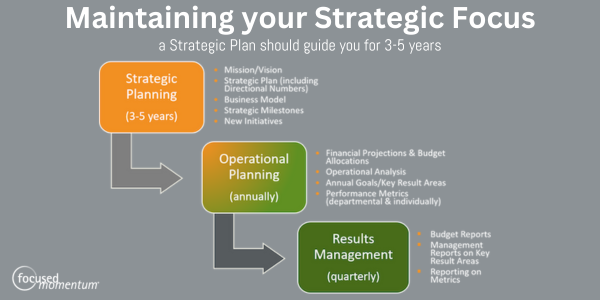
Strategic planning forums are designed (or should be) to shift out of the problem-solving mode, slow discussions down a bit and expand the thinking to set a broader shared context for planning. Strategic planning serves to strengthen operating planning. It provides a framework to align near-term priorities, allocate resources, and discuss any emerging issues that could impact operational performance.

Strategic planning is how you set and maintain your Strategic Focus over time, and it should orient every annual budgeting process.
Want to learn more about how you can bring clarity, confidence, and productivity to your planning?
Download our Free Guide to Strategic Planning.


What are the steps in strategic planning? Three phases: a strategic assessment, strategy creation, and plan development and integration into one plan.

Many strategic plans fail before implementation begins. Learn how completing the full strategic planning process prevents an epic strategy failure.

Most organizations have strategic plans but lack strategic thinking. Learn the distinction that determines whether your planning produces real...
