Commitment
Where does your organization's new direction stand today?
We have an ambitious goal, and each department is working out on its own how to reach it
We have a plan or new direction, but leadership hasn't agreed on which priorities come first and how we will fit into existing priorities
Our plan is approved and the first priorities are agreed, but no senior leader owns implementation, and people are confused as to what happens next
Our plan is approved, the first priorities are sequenced, a senior sponsor owns implementation, and people, time and budget are committed
Plan communication
How has the approved plan been communicated?
Beyond the leadership team, few people have seen the plan
We shared the same summary with everyone
We have drafted messages for each stakeholder group but haven't delivered them all
Each stakeholder group, including those who helped shape the plan, has heard it at the level of detail it needs
Structure and leadership roles
How well do your organizational structures and leadership roles align with the new plan?
We haven't looked at whether our structure and roles can support the new plan
We suspect our structure will need to evolve, but we haven't assessed it
We have identified the structural and role changes needed but haven't made them
Every strategic priority has a clear owner and reporting structures are realigned
Department and initiative plans
How are departments turning the plan into action?
Departments are expected to work out their own approach
Some departments have plans, but they vary and don't connect to each other
We have a common process for department plans, but cross-department initiatives and individual roles are still unclear
Each department and cross-department initiative has a plan tied to the strategy and the budget, and individuals know their part
New capabilities
Does your organization have the capabilities the new direction requires, such as brand and marketing, or new products or programs?
We haven't considered whether the plan requires capabilities we don't have
We know we need new capabilities but have not started to build them
We have started building some of them, without a roadmap tied to the plan
We have identified what the plan requires, and our brand, marketing, and product or program roadmaps are aligned with it
Leadership development
Are your leaders equipped for what the plan asks of them?
We assume our leaders are ready for what the plan asks of them
We have seen gaps but haven't acted on them
We are assessing the leadership capabilities the plan requires
We have targeted development in place, including coaching for the leaders the change asks the most of
Culture and teams
How well do the way people work together and their skills support the new plan?
We expect teams to adjust on their own as implementation unfolds
We know some habits and parts of our culture work against the plan, but we haven't addressed them
We hold some team building or training, but it isn't tied to the plan
Our core values align with this plan, and our team building and skills training is evolving to address gaps the plan requires
Keeping the plan current
How do you keep the plan current?
We'll revisit the plan if problems come up
We review progress informally, with no set rhythm
We hold regular reviews, but they aren't connected to annual priorities and the budget
An annual planning retreat sets each year's priorities and budget against the plan, and the plan update is scheduled for year three
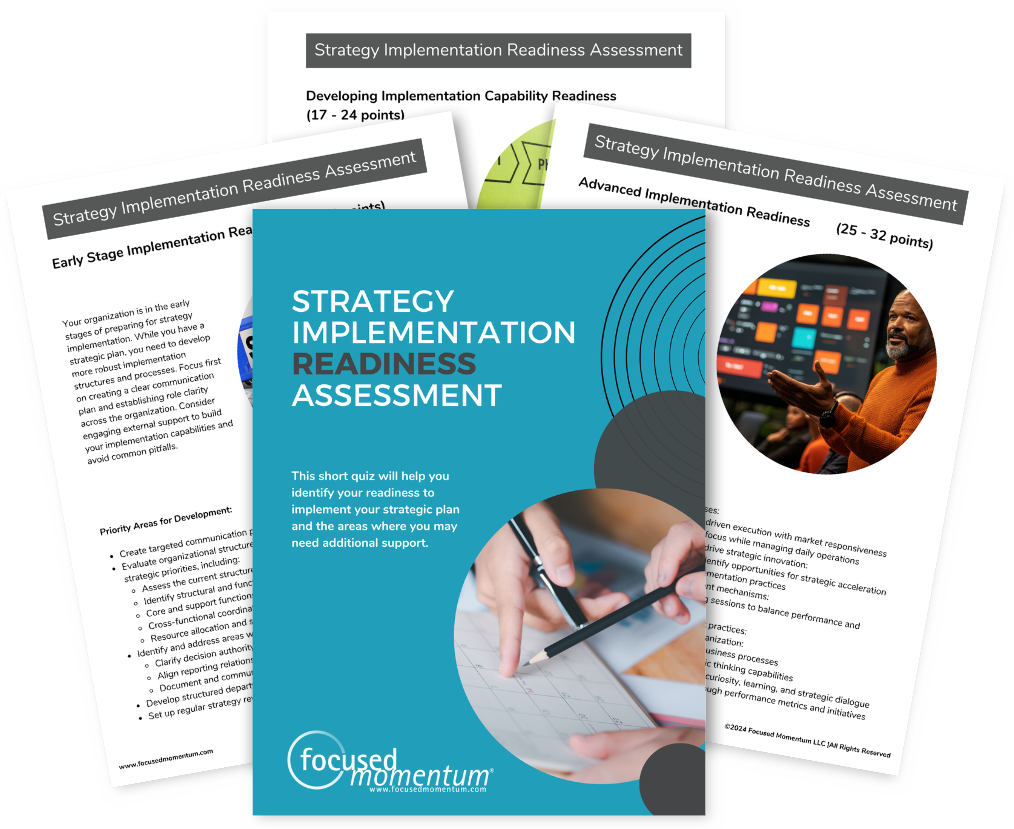
Your result is ready
Tell us where to send your copy of the full assessment, and your implementation readiness level will appear right away.
We'll also send you a short email series on the foundations of strategic planning. You can unsubscribe at any time.
Before implementation: make sure you have a plan, not just a goal.
Your answer to the first question suggests your organization has a goal or direction but not yet a plan everyone has agreed to act on. Implementation works from an approved plan, agreed-upon first priorities, a named senior sponsor, and committed people and budget.
If your direction is set but priorities aren't, a Strategy Boost™ aligns your team on the next 12 to 18 months.
See it in action: In Which Comes First?, an industry leader whose bold growth goal had every department planning on its own, replaced that fragmentation with one company-wide direction.
Announce and align
Your organization is at the start of implementation. The first 30 days after a plan is approved set the tone: everyone needs to hear the plan in terms that matter to them, and every strategic priority needs a clear owner.
Where to focus:
- Strategic plan communication: deliver the plan to each stakeholder group at the level of detail it needs
- Organizational alignment: check whether your structure and leadership roles fit the new plan, and give every priority an owner
See it in action: The Structure Was the Strategy: an academic physician group discovered its operating model couldn't carry its new plan, and restructured to build one that could.
Put the plan to work
Your organization has begun implementing, and some foundations are in place. Year one is where the plan has to reach every department and build the capabilities it requires, and where gaps start to slow progress if they aren't addressed.
Where to focus:
- Departmental and initiative planning: plans for each department and cross-department initiative, tied to the strategy and the budget
- New capabilities: brand and marketing planning, and product or program development, where the plan requires them
- Leadership development and coaching: equip the leaders the change asks the most of
See it in action: Everyone in Their Lane: with the plan approved and the structure in place, every functional team turned its strategic role into a concrete implementation plan.
Sustain and renew
Your organization has strong implementation foundations. The work now is to keep the plan current and ensure culture, teams, and skills keep pace with it, so the plan becomes how your organization operates rather than a document it refers to.
Where to focus:
- Core values, culture, team building and skills training tied to what the plan requires
- Annual planning retreats that set each year's priorities and budget against the plan
- A strategic plan update in year three, before the plan runs out of road
See it in action: Lost in the Dark: a new leadership team brought a new, market-based lens to an inherited plan while keeping its legacy stakeholders on board.
You scored 1 or 2 in these areas. Each one maps to a service that closes it.
No major gaps. Your strongest next step is to keep the plan current.
Strategic plan communication
first 30 days
Stakeholder analysis, message development, and presentation design so each group hears the plan at the level of detail it needs.
Organizational alignment
first 30 days
Implementation capabilities analysis, organizational redesign, functional and leadership team role clarity, and transition planning.
Departmental and initiative planning
year one
Department and cross-department initiative plans integrated with existing commitments, with departmental and individual role clarity.
Brand strategy and marketing planning; product and program development
Positioning the organization for the audiences its new direction depends on, and aligning the product or program roadmap with the long-range vision.
Leadership development and coaching
year one
Strengthening the leadership capabilities the plan requires, including individual coaching for leaders the change asks the most of.
Core values and culture alignment; team building and skills training
Making sure how people work together supports where the organization is going, and building the skills new priorities call for.
Annual planning retreats; strategic plan update
Connecting the plan to each year's priorities and budget, and an expanded retreat in year three to update the plan.
Implementation is where strategy is tested
Implementation is where the strategic direction is tested and strengthened. Use your results from this assessment to decide where to focus first, and share the assessment with your team and organizational leaders: different views of how ready you are can be the first gap to close.
For a closer look at what happens after a plan is approved, read our guide to strategy execution.
Schedule a Call
https://www.focusedmomentum.com/meetings/clynch1/discovery-call-
Check your inbox for your copy of the full assessment, with all three readiness levels and the implementation roadmap.
Want to build strategic thinking across your team? Explore Strategy Class®.